
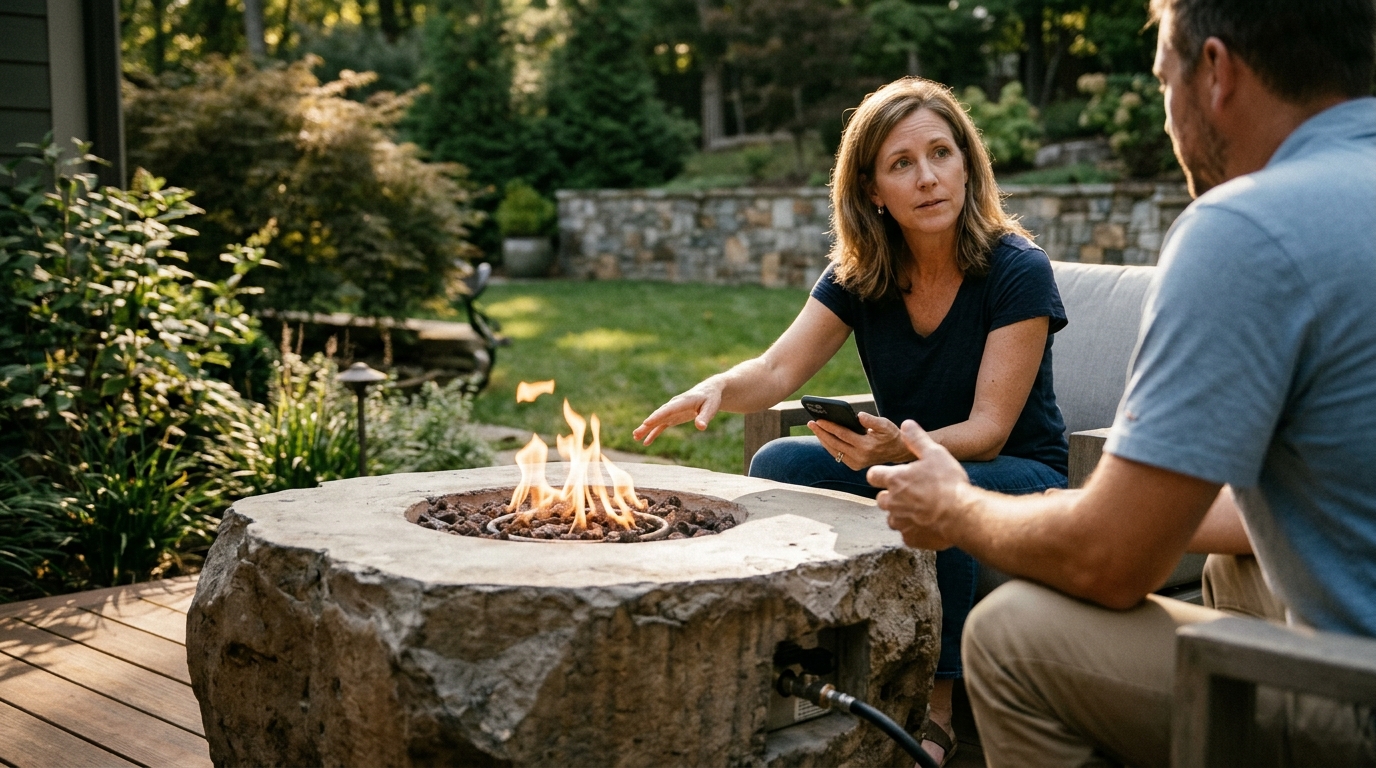
Before choosing between propane and wood burning, tell a specialist about your yard's surface, clearance distances, local fire codes, and how often you plan to use the feature. Backyard Pyre, an authorized dealer based in Knoxville, TN, uses these specific details to match the right fuel type to your space. Providing this information ensures the recommendation fits your safety requirements and lifestyle needs.
Describe Your Surface and Clearance
The ground material and surrounding objects dictate which fuel type is safe and practical. A fire table is a heat-generating appliance that requires specific non-combustible clearances to prevent damage to nearby structures. You must measure the distance from the intended fire table location to walls, railings, and furniture.
Wood-burning features produce embers and ash, which require more robust containment and clearance than gas. Propane units burn cleaner but still generate significant radiant heat. If your patio is made of pavers or concrete, both fuel types are generally suitable, provided you maintain the manufacturer's recommended clearance. If you are placing the table on a wooden deck, the fuel choice becomes critical. Wood-burning pits are often restricted on decks due to ember risk, while gas tables may still require a heat shield or specific spacing.
When consulting with a specialist, provide the exact dimensions of your deck or patio. Mention any overhangs, pergolas, or low-hanging branches. This data allows the specialist to determine if a specific model's heat output is compatible with your layout.
Explain Your Local Fire Codes and HOA Rules
Local regulations and homeowners association (HOA) covenants often dictate whether you can burn wood at all. A fire code is a set of local laws that governs the installation and operation of open flames. Many municipalities ban open wood fires in residential areas due to smoke and air quality concerns. Propane and natural gas are frequently permitted where wood is not.
Before you buy, check your local fire department's guidelines. Some areas require a permit for any outdoor fire feature, while others have specific rules about the type of fuel. HOAs may also have aesthetic or safety restrictions. Telling a specialist about these rules helps them filter out options that would be illegal or prohibited in your neighborhood.
If you live in a strict HOA, a sleek gas fire table might be the only viable option. If you are in a rural area with no restrictions, wood burning might be allowed. The specialist can guide you on which fuel types align with your local legal framework.
Detail Your Maintenance Tolerance and Usage Frequency
Your willingness to perform maintenance is a major factor in choosing between propane and wood. Propane is a clean-burning fuel that requires minimal upkeep, typically just a seasonal check of the gas line. Wood burning is a labor-intensive process that involves splitting, stacking, and hauling fuel, plus regular ash removal.
Consider how often you plan to use the fire feature. If you use it every weekend, the convenience of a push-button propane ignition is a significant advantage. If you use it rarely, the effort of managing wood might be acceptable. A specialist can help you weigh the convenience of gas against the rustic experience of wood.
Backyard Pyre specializes in gas fire features, including propane and natural gas models. If you are leaning toward wood, a specialist can explain the maintenance burden clearly. This helps you make an informed decision based on your actual lifestyle, not just the aesthetic appeal of the flame.
Clarify Your Budget and Fuel Availability
Your budget includes both the initial purchase price and the ongoing cost of fuel. Propane tanks and refills are a recurring expense, while wood costs vary by region and season. A fire table specialist can help you estimate these costs based on your usage patterns. They can also advise on the initial installation costs, which differ between gas and wood.
Gas installation may require a licensed plumber for natural gas lines, while propane is more portable. Wood requires a storage space for dry fuel. Telling a specialist about your budget helps them recommend models that fit your financial constraints. They can also point you toward financing options or sales if available.
Availability of fuel is another factor. In some areas, wood is cheap and abundant, while in others, it is expensive and scarce. Propane is widely available but can be subject to price fluctuations. A specialist can provide local insights on fuel costs and availability.
Key Takeaways
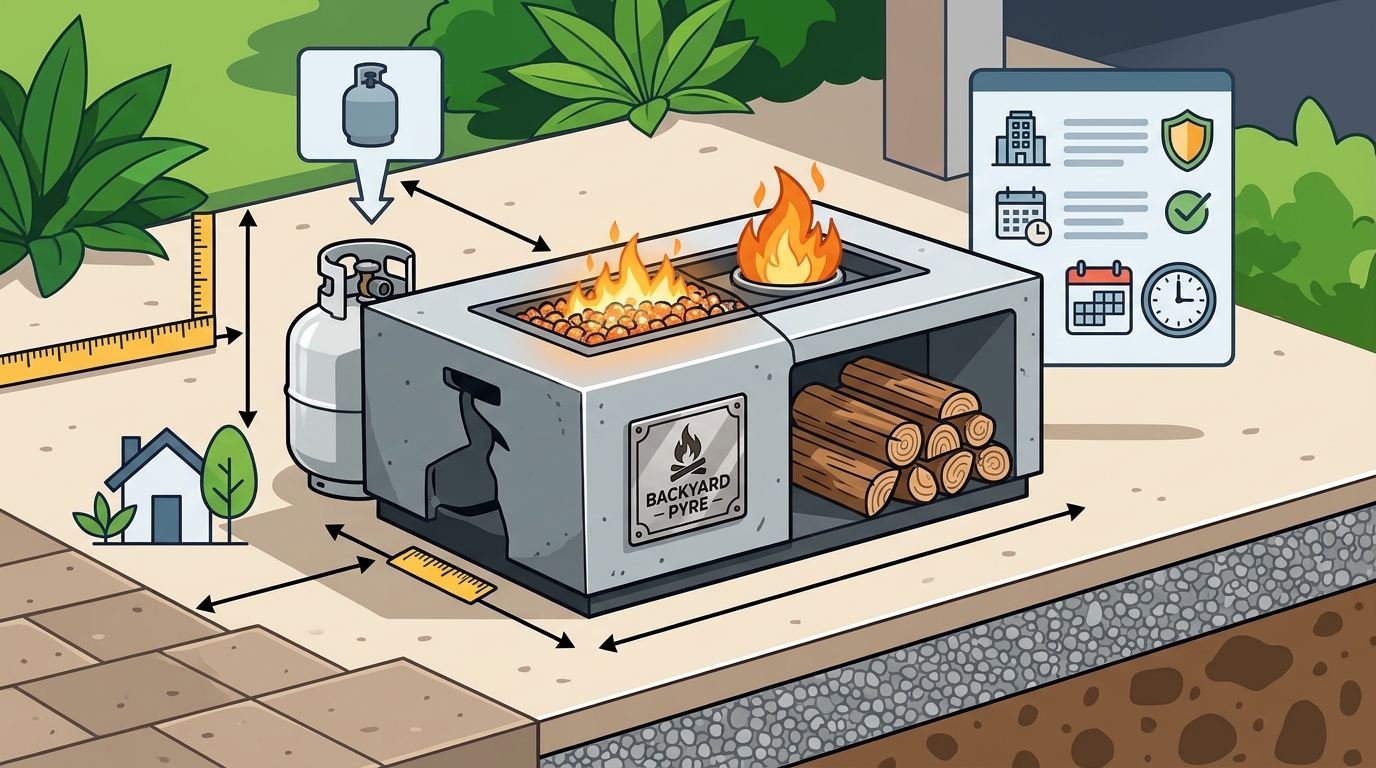
- Measure and report the distance from your intended fire table location to walls, railings, and furniture.
- Check local fire codes and HOA rules to determine if wood burning is permitted in your area.
- Be honest about your willingness to perform maintenance, as wood burning requires significantly more effort than gas.
- Consider your usage frequency; frequent users often prefer the convenience of propane or natural gas.
- Include both the purchase price and ongoing fuel costs in your budget discussion.
- Provide the surface material of your patio or deck, as this affects fuel safety and clearance requirements.
Frequently Asked Questions
Can I use a wood-burning fire table on a wooden deck?
Generally, no. Wood-burning features produce embers that can ignite wooden decks. Most fire codes and manufacturers prohibit wood-burning pits on combustible surfaces like wood decks. Gas fire tables are often safer for decks, provided you maintain proper clearance and use a heat shield if required.
Do I need a permit for a propane fire table?
Permit requirements vary by location. Some municipalities require a permit for any outdoor fire feature, while others do not. Check with your local fire department or building department to determine if a permit is needed for your specific installation.
How much clearance do I need for a gas fire table?
Clearance requirements depend on the specific model and local codes. Most gas fire tables require specific clearance distances from walls, railings, and furniture. Always follow the manufacturer's instructions and local fire codes for exact clearance distances.
Is propane more expensive than wood?
Can I convert a wood-burning fire pit to gas?
Some wood-burning fire pits can be converted to gas, but it is not always possible. The conversion requires a compatible gas burner and proper ventilation. Consult a specialist to determine if your specific model can be converted safely and legally.
Next Steps for Your Consultation
When you are ready to choose a fire feature, prepare a simple list of your yard's dimensions, surface materials, and local regulations. This information allows a specialist to provide a tailored recommendation. Backyard Pyre offers expert guidance on selecting the right gas fire table for your space. to start your consultation and find the perfect fit for your outdoor living area. Learn more: Contact Us ndash Backyard.