
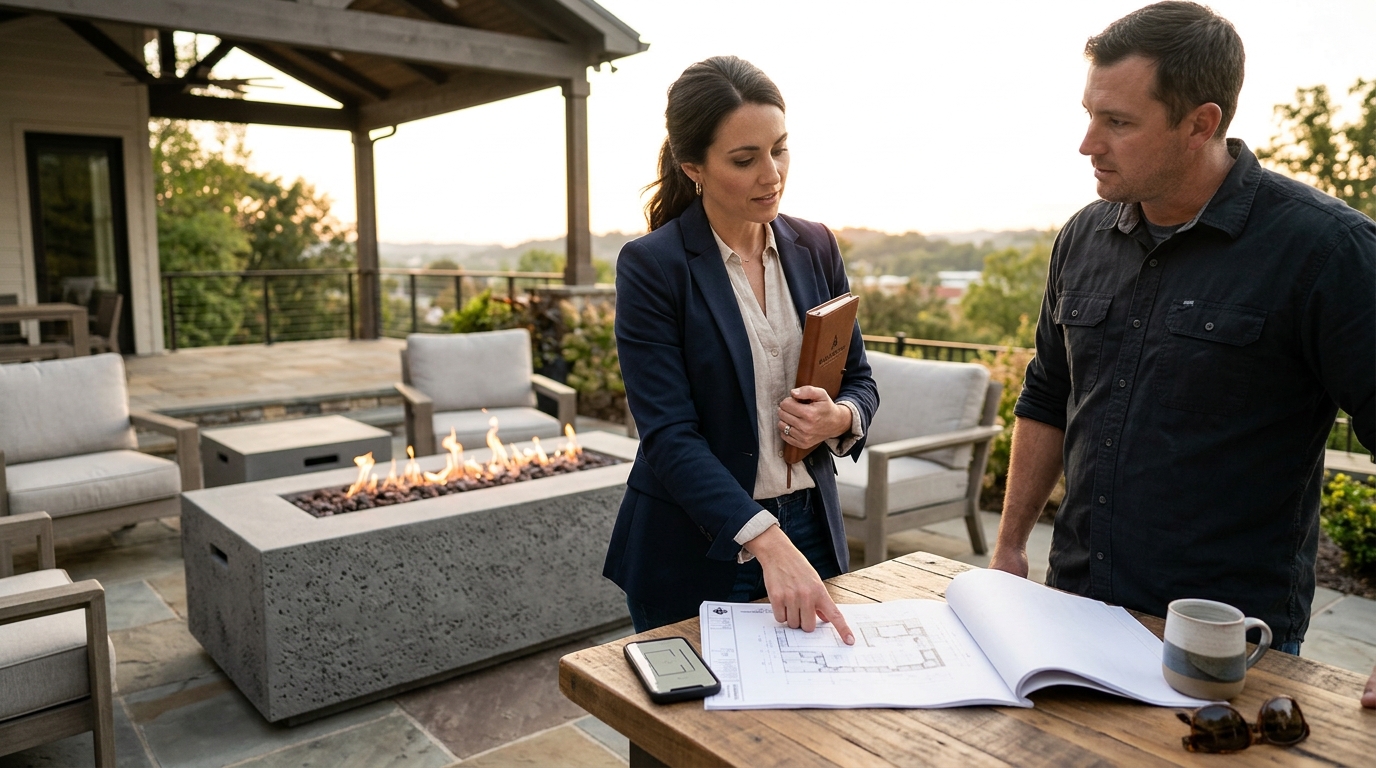
Designers must verify exact model clearances, fuel supply logistics, and local building codes before specifying luxury fire features. Backyard Pyre, an authorized dealer in Knoxville, TN, emphasizes that a roof height alone does not guarantee safety. Proper installation requires matching the appliance manual to the specific site conditions to ensure compliance and client satisfaction.
Verifying Installation Clearances and Overhead Limits
Clearance requirements are the primary safety constraint for any fire feature installation. A propane fire table can go under a covered patio only when the exact model’s installation instructions permit that setting. Designers must read the location restrictions and clearance diagrams for the specific fuel version they intend to specify. A stated clearance does not override an explicit prohibition in the manual.
Propane combustion produces carbon monoxide, an odorless and poisonous gas. An outdoor appliance must not be treated as an indoor heater simply because it sits beside an exterior wall. The physical separation between the flame and overhead structures, such as ceilings or beams, is critical. Designers should measure every required separation, including overhead structures, side walls, and nearby furnishings, before finalizing the layout.
If the manual prohibits a specific setting, the designer should choose another location rather than modifying the patio to fit an assumed exception. Do not use a brief test burn as proof that an installation is acceptable. The site assessment must account for how heat and combustion gases leave the seating area under the specific roof or enclosure conditions.
Fuel Supply Logistics and Tank Placement
Fuel selection dictates the physical footprint and installation complexity of the feature. Propane versions run off a standard 20 lb tank stored discreetly inside the base, requiring no permanent installation. The natural gas version connects to a dedicated gas line for a permanent setup. Designers must confirm the exact propane or natural gas configuration, tank arrangement, and connection requirements for the chosen model.
The tank for a propane fire table belongs either in a compartment specifically designed for that cylinder or in the external location required by the model's installation instructions. An empty tank must be stored safely away from the appliance. For natural gas connections, a licensed professional must handle the final connection to the main line. Designers should plan the cylinder and hose location without obstructing ventilation, access, or walkways.
Backyard Pyre advises clients to confirm propane tank placement before ordering. Tank placement belongs in the layout before the table is selected. This ensures that the fuel source does not compromise the circulation path or violate safety clearances. The choice between portability and a built-in feature depends on the client's long-term use of the space.
Material Selection and Maintenance Requirements
Material choice impacts both the aesthetic and the maintenance burden of the installation. GFRC means glass-fiber-reinforced concrete, which is concrete reinforced with glass fibers. Designers should follow the model's care instructions rather than treating every concrete-looking finish alike. Cast concrete is a hand-finished process, and the finish will vary by unit, with a color variance of up to 15% in each unit.
Minor chipping, weather fading, and non-structural hairline cracks are typical of cast concrete materials. These are not covered under warranty and should be communicated to clients during the design phase. Some color and texture variation is typical of the material and finish. Designers must manage client expectations regarding the natural aging process of these premium materials.
Marble-porcelain options offer a different maintenance profile compared to GFRC. Designers should select materials based on the specific environmental conditions of the client's patio. The material must be compatible with the local climate and the level of protection provided by the patio structure. Proper material selection ensures the feature remains a focal point rather than a maintenance liability.
Local Regulations and Professional Installation
Local building and fire codes vary significantly by jurisdiction. Designers must resolve local requirements before installation by asking the relevant building or fire authority about the exact appliance and proposed location. The manufacturer’s instructions must permit the proposed location, and the patio must meet its ventilation and clearance requirements. Local rules may impose additional restrictions that affect the building or property.
Most models are DIY-friendly and take roughly 5 to 20 minutes to set up out of the box. However, if connecting to a main natural gas line, a licensed professional must handle the final connection. Designers should coordinate with local contractors to ensure compliance with regional codes. This step prevents costly rework and ensures the installation is legally sound.
Backyard Pyre is an outdoor fire-feature retailer, not the authority approving your covered-patio installation. Use retail guidance to narrow your choices, then check the exact appliance manual and site requirements before ordering. The designer remains responsible for ensuring the final installation meets all local regulatory standards. This collaborative approach protects both the client and the designer's professional reputation.
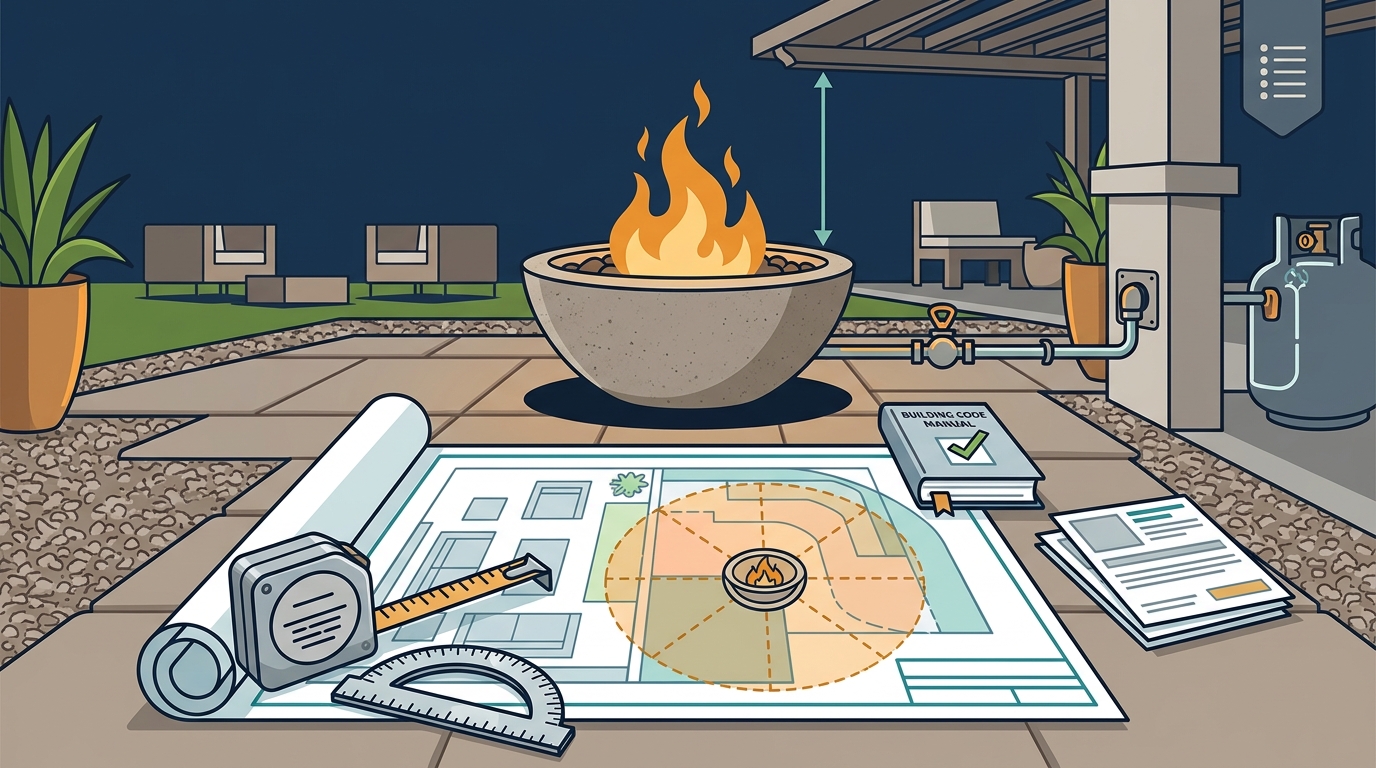
Key Takeaways
- Verify the exact model’s installation instructions permit the proposed location before specifying.
- Measure all clearances, including overhead structures, side walls, and nearby furnishings.
- Plan the fuel supply location to avoid obstructing ventilation or walkways.
- Communicate natural material variations, such as color variance in cast concrete, to clients.
- Consult local building and fire authorities to ensure compliance with regional codes.
- Use a licensed professional for any natural gas line connections.
- Do not rely on a brief test burn to validate an installation’s safety.
Frequently Asked Questions
Can a propane fire table go under a covered patio?
Yes, conditionally. It can only go under cover when the exact model’s installation instructions permit that setting, the patio meets its ventilation and clearance requirements, and local rules allow the installation.
What is GFRC in the context of fire features?
GFRC is glass-fiber-reinforced concrete. It is concrete reinforced with glass fibers, providing durability and a premium finish for outdoor fire tables.
Who is responsible for the final natural gas connection?
A licensed professional must handle the final connection to the main natural gas line. Designers should coordinate with local contractors to ensure compliance.
Does a wind guard replace overhead clearance requirements?
No. A wind screen does not replace overhead clearance, outdoor ventilation, or correct propane tank placement. These are distinct safety requirements.
How much color variance is typical in cast concrete fire features?
There will be a color variance of up to 15% in each unit. This is a normal trait of the hand-finished cast concrete process.
Can I use a brief test burn to prove an installation is safe?
No. Do not use a brief test burn as proof that an installation is acceptable. The site assessment must be based on the manufacturer’s instructions and local codes. according to Burn Wise Test
Partnering with an Authorized Dealer
Designers benefit from working with a specialist who understands the nuances of luxury outdoor installations. Backyard Pyre offers expert guidance on matching the right piece to your space, fuel type, and budget. As an authorized dealer, we ensure every piece is genuine and backed by the manufacturer’s warranty. To plan your next project, for a free consultation.